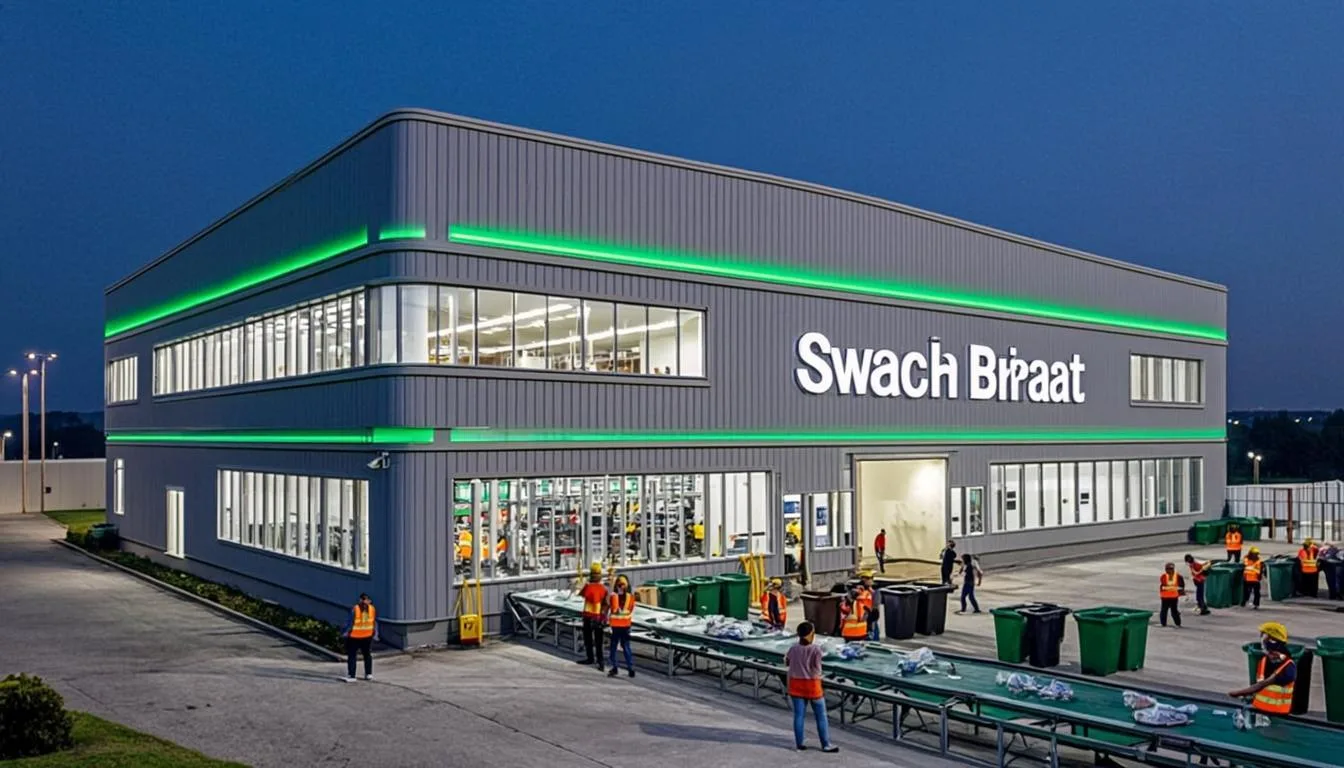

If your sustainability claim cannot survive an audit, it is not a claim. How Greenics defines and measures circularity across waste, logistics and procurement.
'Circular economy' has become a marketing word. It shows up in pitch decks and annual reports without a definition, a metric, or an audit trail. This is a problem, because the underlying concept is genuinely useful — and the only way to defend it from marketing dilution is to measure it.
We define circularity as the share of material, by weight, that is recovered for reuse, recycling or energy recovery before it reaches a landfill. This is not a perfect definition. It does not capture embedded emissions, water use, or social impact. But it is auditable, comparable across sites, and hard to game.
For a waste-management engagement, the metric is direct: tonnes diverted divided by tonnes collected. For a logistics engagement, the proxy is fuel and empty-mile reduction against a baseline. For a trading engagement, it is the share of suppliers that meet documented environmental and labour norms.
The point is not the metric itself. The point is that every circularity claim should resolve to a number, a baseline, and a method. If a vendor cannot produce all three, the claim is aspirational, not operational.
This is the standard we hold ourselves to. When we report on a Greenics engagement, the numbers are auditable by the client's own team. Sustainability claims that cannot survive an audit should not be made.